When Should a Slide Become a Handout? A Practical Design Guide
Separate what the audience needs during the presentation from what they need afterward. Use the Live–Later test to design clearer slides and more useful handouts.

Separate what the audience needs during the presentation from what they need afterward. Use the Live–Later test to design clearer slides and more useful handouts.

Learn how to communicate estimates, ranges, assumptions and unknowns without sounding vague or overconfident, using a practical Known–Estimate–Condition framework.

Awkward presentation transitions usually reveal more than a missing phrase. Learn how order, section endings, pauses, slides, and idea relationships affect flow.

People can listen closely and still miss an instruction. See how working memory, timing, sequence, hidden context, and task load change what gets remembered.
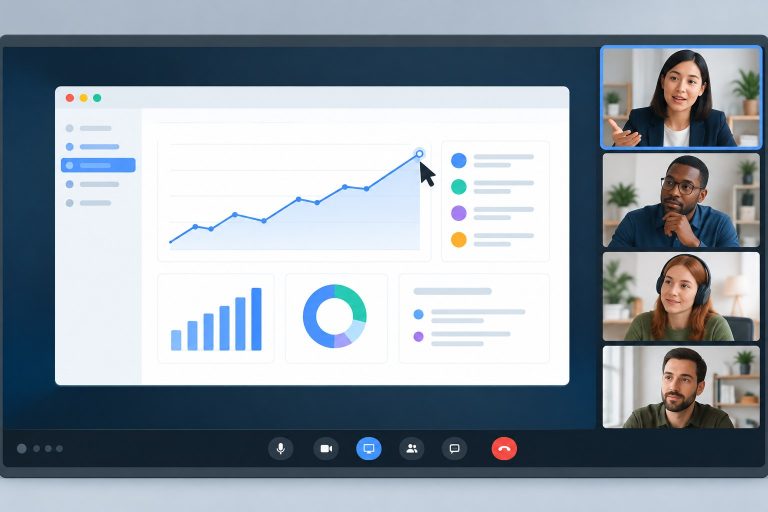
Learn how to share your screen so people can follow the right content, read it comfortably, ask questions, and return to the meeting without losing the thread.

Choose between a table and a chart by the task your audience needs to perform, from exact value lookup to seeing patterns, trends, and comparisons.

Use vocal variety to make contrasts, conditions, and important ideas easier to hear without forcing dramatic pitch, volume, or pauses.

Learn how to shorten a 20-minute presentation to 10 minutes without rushing, losing evidence, or weakening the decision your audience needs to make.
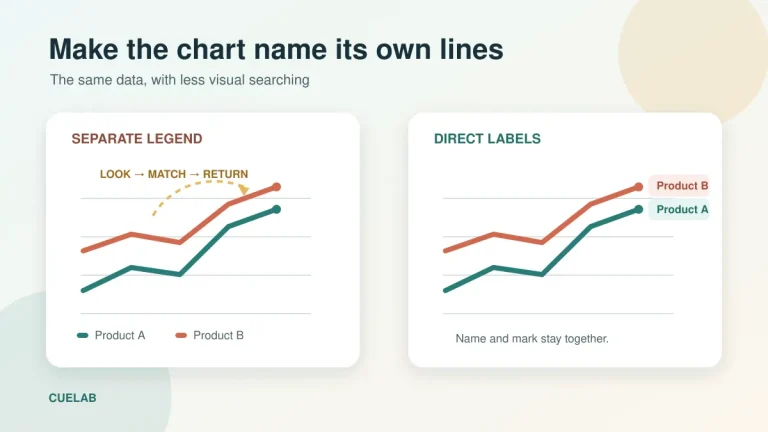
A practical guide to replacing detached chart legends with direct labels that reduce visual searching, strengthen accessibility, and keep evidence beside its meaning.

Why a polite invitation can produce a silent room—and how focused prompts, wait time, and lower-pressure response routes lead to better questions.